Does Cold Water Actually Hydrate You Faster?
Quick Answer: Cold water empties from the stomach at roughly the same rate as room temperature water, so it does not meaningfully hydrate you faster. What cold water does do is make you drink more of it voluntarily — studies consistently show people consume noticeably larger volumes when water is cool — and it helps lower core temperature during exercise in heat. More volume consumed is the real advantage, and it is a behavioral effect rather than an absorption one.
Drink whichever temperature makes you drink more. That is genuinely the practical answer.
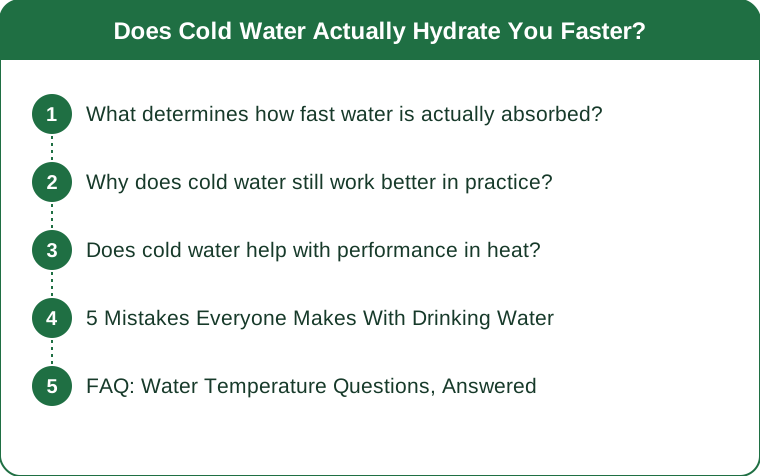
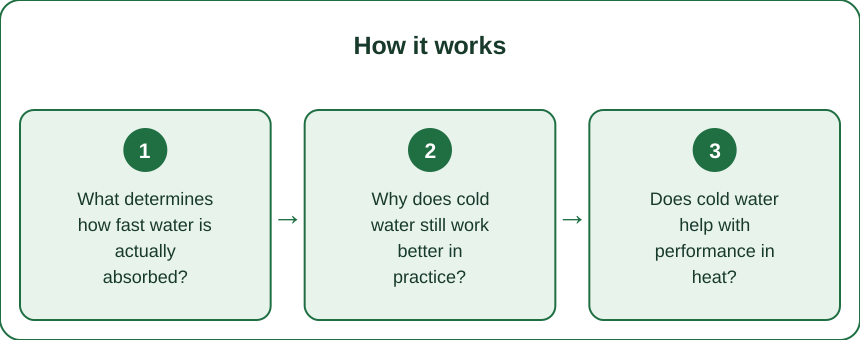
What determines how fast water is actually absorbed?
Two things, and temperature is not really either of them.
Gastric emptying rate. Water has to leave the stomach before it can be absorbed in the small intestine, and this is the rate-limiting step. It is driven mainly by the volume in the stomach and the composition of what you drank — plain water empties fastest, and adding carbohydrate or high concentrations of anything slows it down.
Intestinal absorption. In the small intestine, water follows sodium and glucose across the gut wall. This is why oral rehydration solutions contain both, and why they rehydrate more effectively than plain water when you are genuinely depleted.
Where temperature fits in: studies examining gastric emptying at different drink temperatures have generally found small or inconsistent differences. Very cold drinks may empty marginally faster in some conditions, but the effect is not large enough to be practically meaningful for hydration status.
What actually speeds things up: drinking a larger volume at once, since gastric emptying is volume-driven. A 400ml drink empties faster in total than four 100ml sips spread over the same period. And including sodium, which improves retention rather than speed — water without electrolytes is partly excreted rather than held.
So the honest conclusion on absorption: temperature is a minor variable. Volume and composition are the major ones.
Why does cold water still work better in practice?
Because you drink more of it, and that beats a small absorption difference every time.
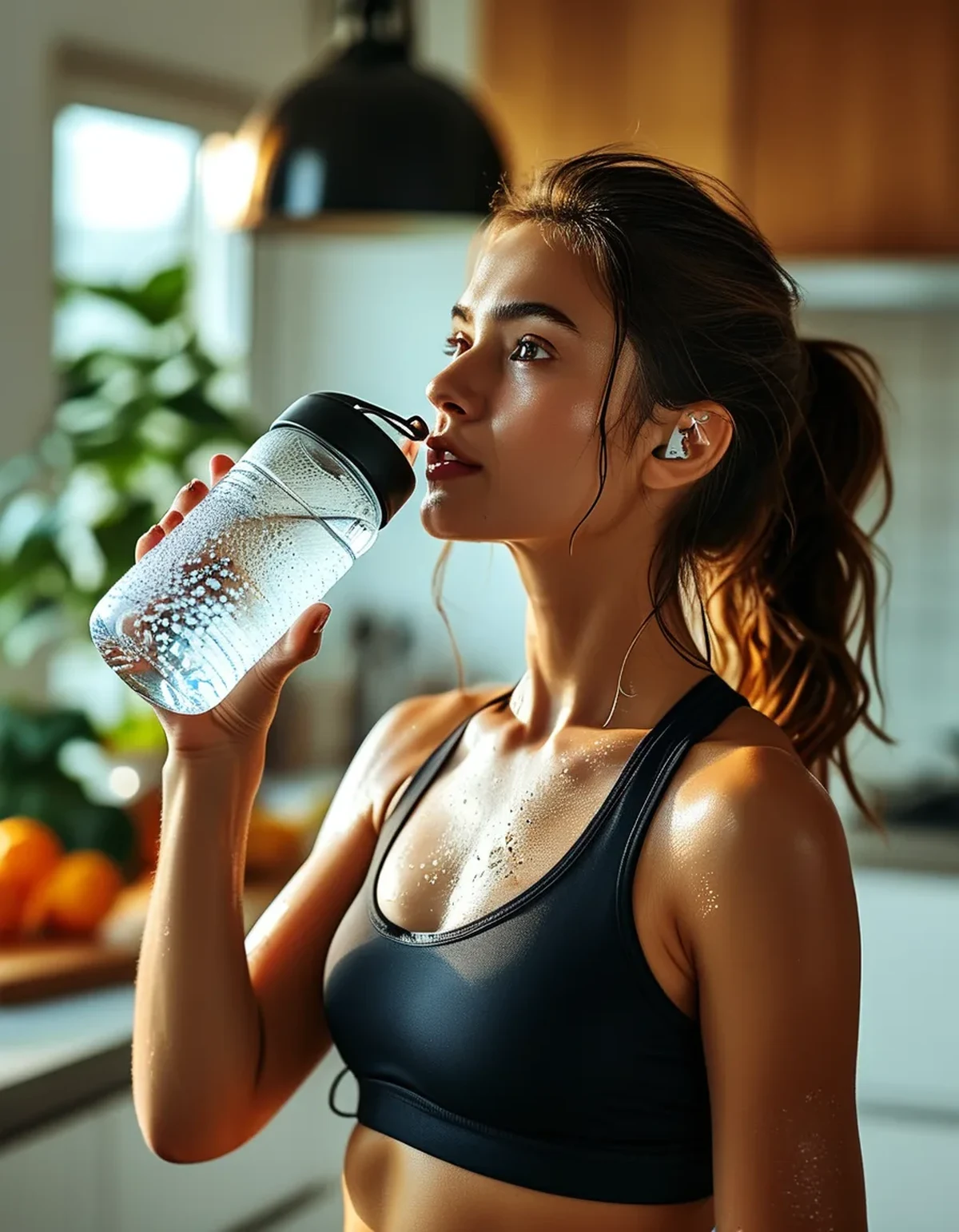
The behavioral finding is consistent. Research on voluntary fluid intake during exercise has repeatedly found that people drink substantially more when the water is cool — commonly in the 15 to 21°C range, roughly refrigerator-cool rather than ice-cold — compared to warm or body-temperature water. In some studies the difference in voluntary intake is large.
Why it matters: most people under-drink during and after exercise. If cool water increases the amount you actually consume by a meaningful percentage, that swamps any absorption difference between temperatures.
The palatability effect is not trivial. Warm water genuinely tastes worse to most people and produces less of a sensation of thirst relief, which means you stop drinking sooner even when you still need fluid.
The interesting nuance: ice-cold water is not necessarily better than cool water. Very cold drinks can cause some people to drink less, not more, because of the discomfort of drinking large volumes of very cold liquid quickly. Cool tends to outperform both warm and ice-cold on voluntary intake.
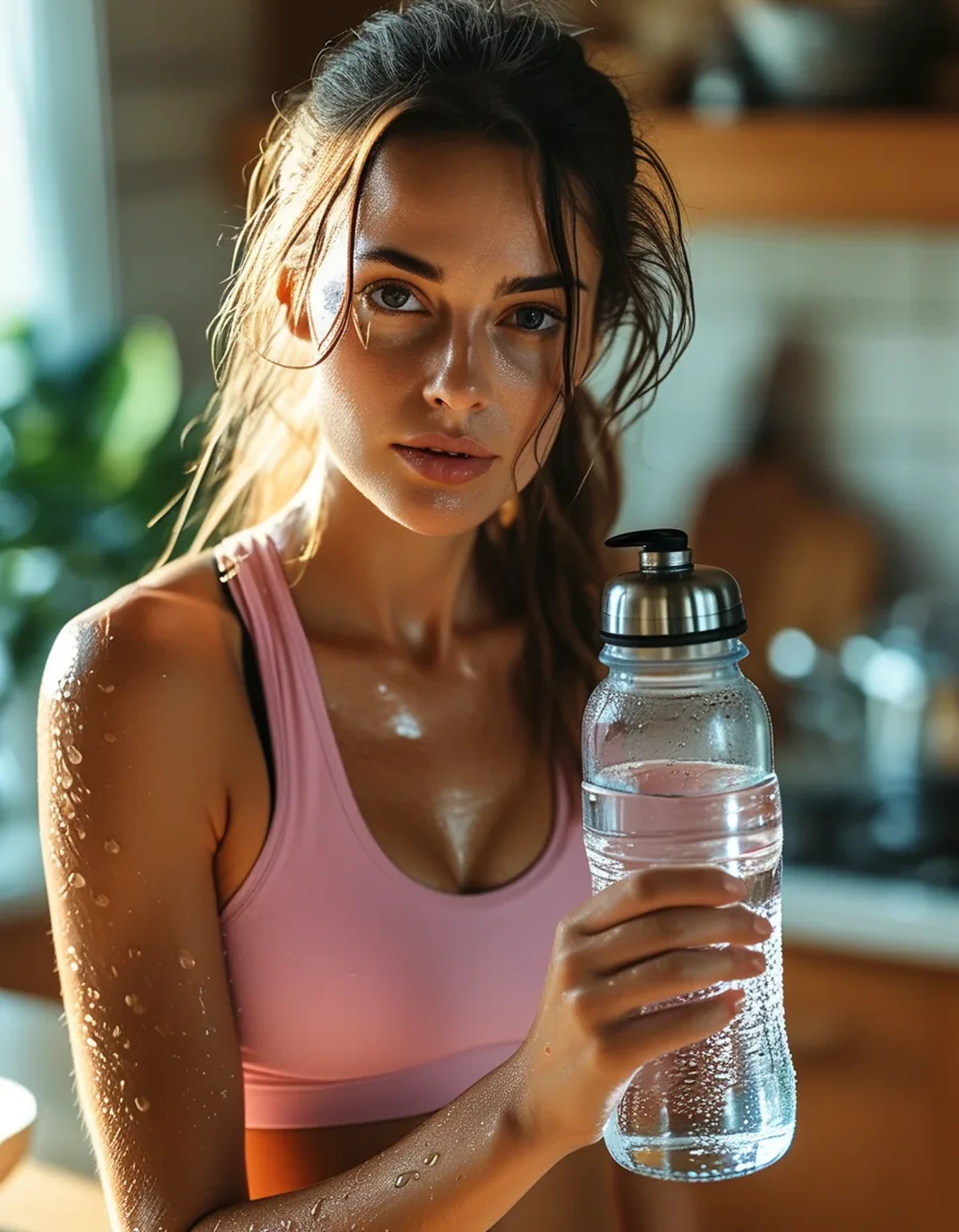
Practical implication: an insulated bottle that keeps water cool through a whole workout is a legitimately useful hydration tool, and its mechanism is that you drink more, not that the water works better.
Does cold water help with performance in heat?
Yes, and this is where cold has a genuine physiological advantage separate from hydration.
The mechanism is heat sink. Drinking cold fluid absorbs heat from the body internally, lowering core temperature slightly. In hot conditions, where core temperature is the limiting factor for endurance performance, this is real and measurable.
The evidence: studies on cold fluid ingestion and ice slurries before and during exercise in heat have shown improvements in time to exhaustion and reductions in core temperature. Ice slurry — a partially frozen drink — is more effective than cold water alone, because melting ice absorbs substantially more heat than warming liquid does.
Pre-cooling is a legitimate strategy. Drinking a cold beverage or ice slurry before exercise in the heat lowers starting core temperature and buys time before heat becomes limiting. Endurance athletes competing in hot conditions use this deliberately.
Where it does not help much: in cool conditions, where core temperature is not the limiter, cold water offers no performance advantage. In late August that is still often relevant; by mid-October in most of the US it is not.
One caveat worth knowing: very cold fluids taken in large volumes during hard exercise can cause stomach discomfort in some people. As with everything, test it in training rather than on a race day.
5 Mistakes Everyone Makes With Drinking Water
1. Waiting for thirst during exercise. Thirst is a lagging indicator during activity, particularly in heat where sweat losses outpace the sensation. Drinking on a schedule — roughly every 15 to 20 minutes during sustained exercise — works better than drinking on feel.
2. Chugging a large volume at once after exercise. A single large bolus is partly excreted rather than retained. Steady intake over a couple of hours, with some sodium, retains substantially more of what you drink.
3. Ignoring sodium after heavy sweating. Replacing a litre of sweat with a litre of plain water dilutes blood sodium slightly, which in extreme cases is genuinely dangerous and in ordinary cases just leaves you feeling flat and needing to urinate. If you sweat heavily, salt is part of the replacement.
4. Using urine color as the only check. It is a rough guide and it is affected by supplements, particularly B vitamins, and by how recently you drank. Morning body weight tracked over a week is more reliable — a drop of more than about 2 percent from your normal baseline suggests under-hydration.
5. Assuming cool weather means lower needs. Sweat evaporates faster in dry cool air, so you lose fluid without feeling wet, and the thirst drive is blunted in the cold. Autumn training is a genuinely common time to under-drink, precisely because it does not feel like you are losing much.
FAQ: Water Temperature Questions, Answered
Is drinking ice water bad for digestion?
There is no good evidence that it harms digestion in healthy people. Some individuals find very cold drinks uncomfortable with meals, which is a personal tolerance matter rather than a physiological problem.
Does warm water have any advantage?
For comfort and for some people’s digestion, yes, and warm drinks are easier to consume in volume in cold weather when cold water is unappealing. In cold conditions, warm fluid is the version that increases your voluntary intake — which is the same principle as cool water in summer, just inverted.
Does the bottle material change anything?
Not for absorption. It changes temperature retention, which changes how much you drink. An insulated bottle that keeps water cool for hours has a real behavioral effect in warm weather.
What temperature is optimal, if I had to pick one?
Roughly 15 to 21°C — cool, not ice-cold — maximizes voluntary intake for most people in most conditions. For exercise in significant heat specifically, colder or an ice slurry has an added core temperature benefit.
TL;DR:
- Temperature has minimal effect on how fast water is absorbed; volume and sodium matter far more.
- Cool water wins because people voluntarily drink noticeably more of it.
- Cool beats ice-cold for total intake; ice slurry beats both for performance in serious heat.
- Drink on a schedule during exercise, and steadily rather than in one bolus afterwards.
- Cool autumn air blunts thirst while sweat still evaporates — under-drinking is common in fall.
The best water temperature is the one that gets you to drink more of it. That is not a cop-out, it is the actual finding.
Keep Reading
This article is for general informational purposes only and is not medical advice. Always consult a qualified health professional for guidance specific to you.