Why Your Hydration Needs Change When Training Moves Indoors
Quick Answer: Indoor training often produces higher sweat rates than outdoor training at the same effort, because there is no airflow to aid evaporative cooling. But thirst falls in cooler weather, so people drink less while sweating similarly. Autumn is where hydration habits and actual needs diverge most.
You assume that once the weather cools, hydration stops being a concern. It gets easier, surely — you are not running in 28°C any more.
Then you finish an indoor session in October with a headache and a shirt as wet as any July run. Here is what changed and what did not.
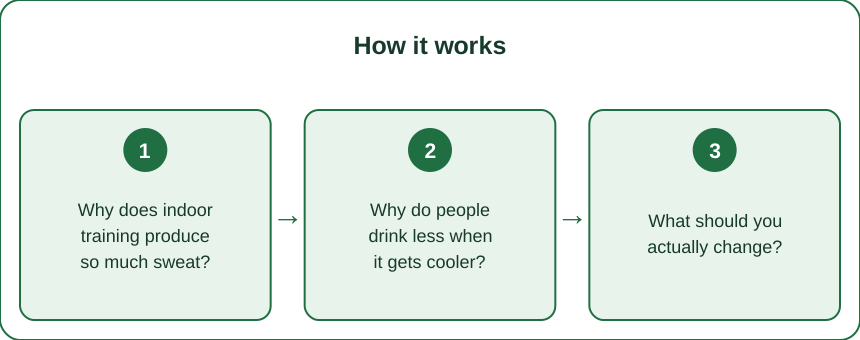
Why does indoor training produce so much sweat?
Because sweating cools you only when it evaporates, and evaporation needs moving, unsaturated air.
Outdoors, even at higher temperatures, you generate airflow by moving through the air, and there is usually some wind. That airflow carries away the humid layer next to your skin and lets more sweat evaporate, which cools you efficiently. Sweat that evaporates does its job; sweat that drips is wasted fluid.
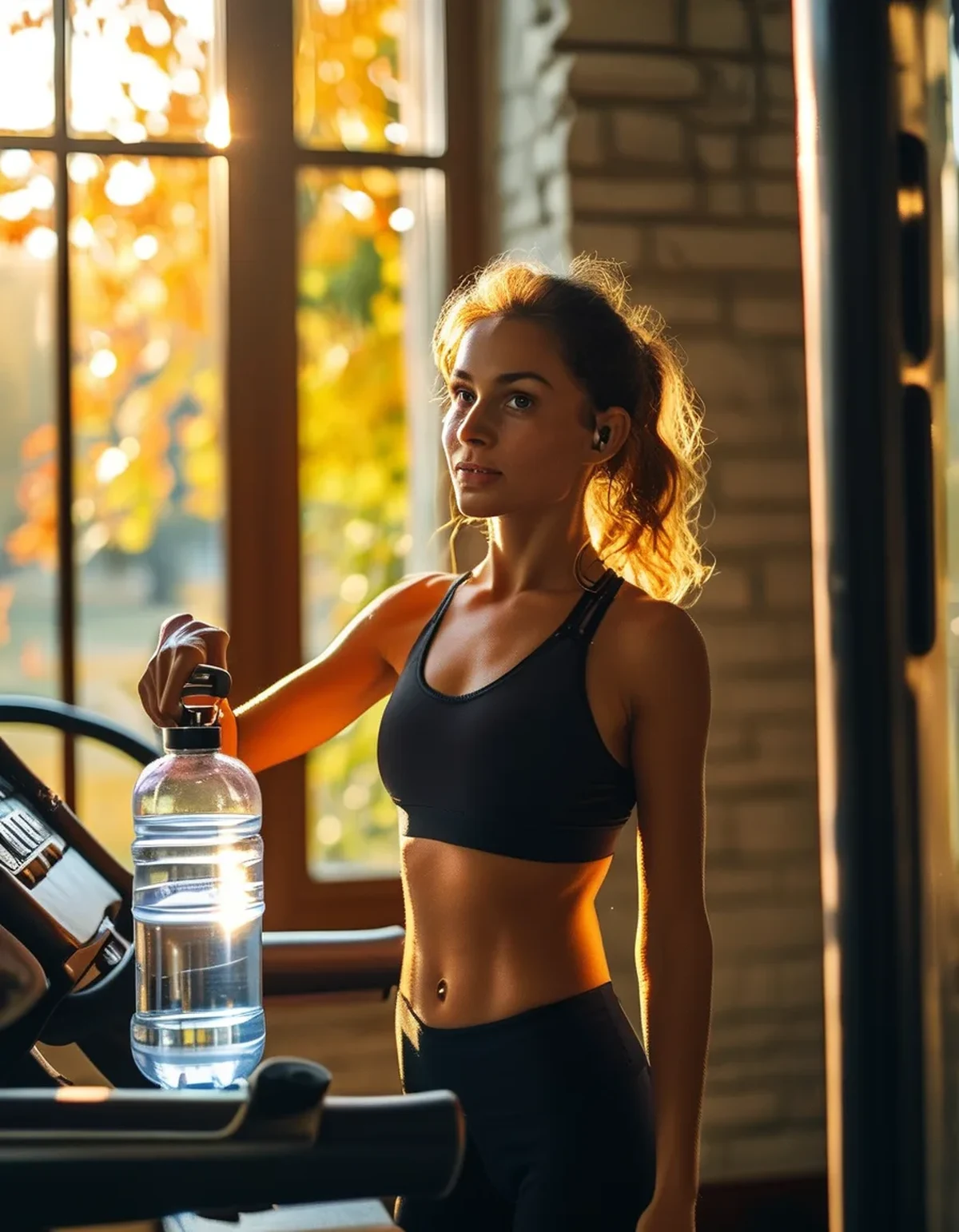
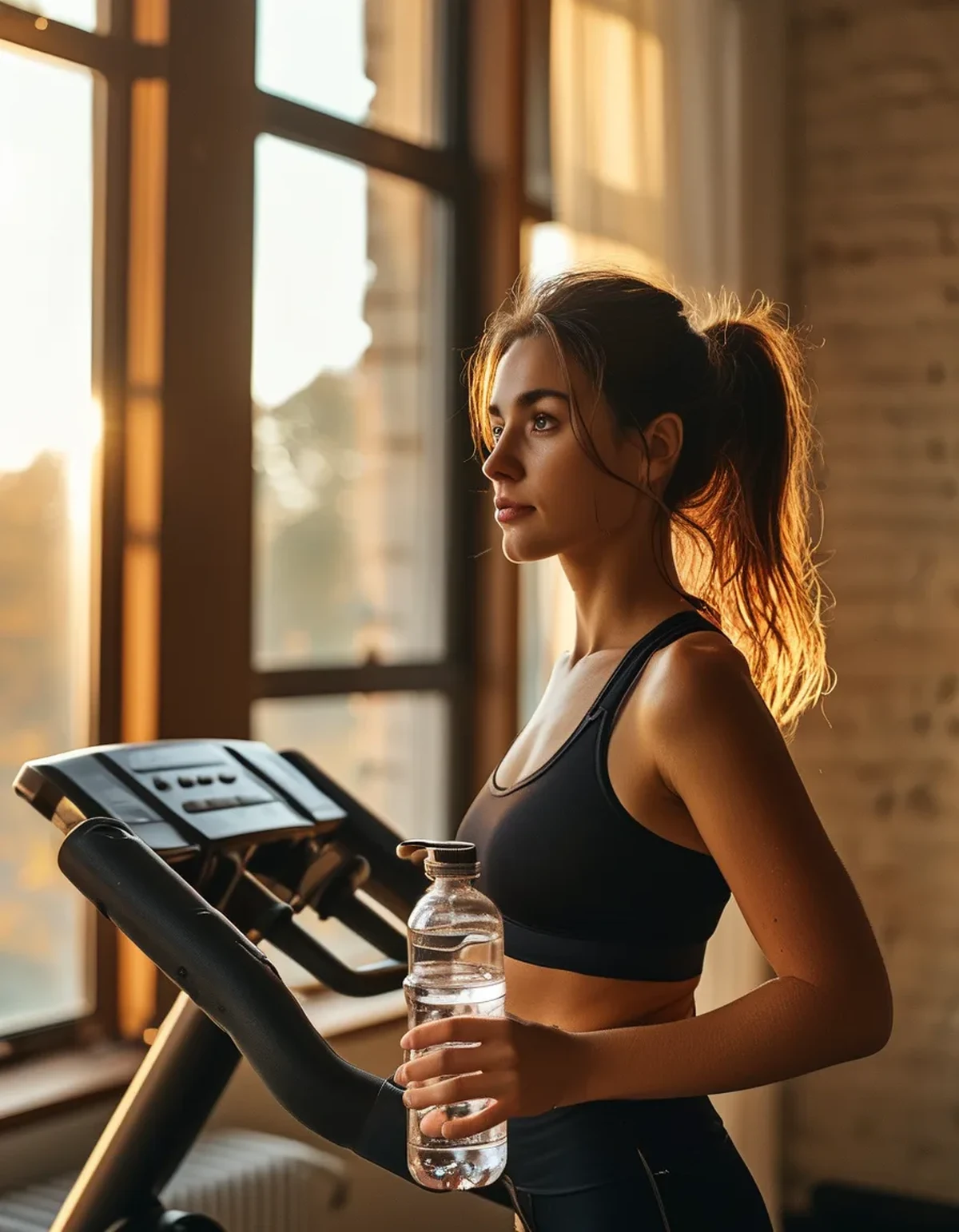
Indoors — a gym, a spin studio, a treadmill facing a wall — you are stationary relative to the air. The humid boundary layer around your body stays put, evaporation slows, and your body responds by sweating more, because the cooling is not happening.
This is why a stationary bike session at the same power as an outdoor ride is dramatically sweatier, and why indoor rowing and treadmill running feel disproportionately hot.
Add the season’s other change: heating. From October onwards, indoor spaces are heated, often to 20 to 22°C, which is a good deal warmer than the autumn air outside and warmer than most gyms are in summer with the doors open.
Net result: sweat rates indoors in autumn are frequently as high as outdoor summer rates, and sometimes higher.
Why do people drink less when it gets cooler?
Because thirst is a poor and season-sensitive signal.
Thirst is driven mainly by blood osmolality and volume, and it is blunted in cool conditions. Cold exposure specifically reduces thirst perception, partly through a shift in blood volume distribution. Studies of cold-weather activity consistently find voluntary fluid intake falls even when sweat losses remain substantial.
There are behavioural factors too. Cold water is less appealing in cool weather. Carrying a bottle feels less necessary. And the psychological association between heat and hydration is strong enough that people simply stop thinking about it.
The result is a gap: losses stay high because you are training in a heated indoor space, while intake falls because the outdoor environment tells your brain hydration is not urgent. Autumn is where that gap is widest.
The consequences are mild but real — headache, reduced performance, poor concentration, and that flat feeling in the hours after training. A fluid deficit of around 2 percent of body mass measurably impairs endurance performance and concentration, and it is easy to reach across a couple of sessions without noticing.
The fix is to stop relying on thirst in autumn and winter, and use a schedule or a target instead.
What should you actually change?
Four practical adjustments as training moves indoors.
Learn your indoor sweat rate. Weigh yourself before and after one indoor session, towelled dry, accounting for anything you drank. Each kilogram lost is about a litre of sweat. Most people are surprised by the number, and it makes everything else precise instead of guessed.
Drink to a schedule, not to thirst. Roughly 400 to 600 ml in the two hours before, 150 to 250 ml every 15 to 20 minutes during a hard indoor session, and about 1.5 times any deficit afterwards.
Keep electrolytes in the picture. People associate them with summer, but sodium loss depends on sweat volume rather than on outdoor temperature. If you are losing over a litre in a session, sodium replacement matters regardless of the season.
Add airflow if you can. A fan on a stationary bike or treadmill is not a comfort item — it substantially improves evaporative cooling, reduces sweat rate, lowers heart rate at the same power, and improves performance. It is one of the highest-value pieces of equipment in indoor training.
And bring a warmer drink if cold water puts you off. Fluid absorption is barely affected by temperature, and drinking something you want to drink beats optimising for a marginal difference.
Myth vs Fact: hydration
Myth: you need eight glasses of water a day. Fact: requirements vary enormously with body size, activity, diet, and climate, and about 20 to 30 percent of intake comes from food. The figure has no strong evidential basis. Pale yellow urine and infrequent thirst are more useful indicators than a glass count.
Myth: coffee and tea dehydrate you. Fact: at typical intakes, caffeinated drinks contribute net positively to hydration. The diuretic effect is modest and is outweighed by the fluid volume.
Myth: if you are thirsty you are already dangerously dehydrated. Fact: thirst is a normal, functional signal and not an emergency. The genuine caveat is that it is blunted in cool weather and in older adults — which is why scheduled drinking is useful in autumn specifically.
Myth: clear urine means well hydrated. Fact: completely clear urine usually means you have drunk more than you need and are excreting the excess. Pale straw is the target.
Myth: electrolyte drinks are only for endurance athletes. Fact: they matter when sweat losses are high — which includes hot yoga, indoor cycling, and any session producing more than about a litre of sweat, regardless of how long it lasted.
FAQ: Indoor Hydration Questions, Answered
How do I know if I am actually dehydrated?
Urine colour first thing in the morning is the most practical daily check — pale straw is good, dark amber is not. Body mass first thing, tracked over a week, is more sensitive: an unexplained drop of a kilogram or more is usually fluid.
Should I drink during a 45-minute gym session?
If it is a hard session in a warm room, yes — modest amounts throughout are better than nothing and better than a large volume at the end. For a moderate 45-minute session, drinking before and after is usually sufficient. Sweat rate matters more than duration.
Can you drink too much?
Yes. Consuming large volumes of plain water rapidly, particularly during and after heavy sweating, can dilute blood sodium. It is uncommon but serious. Include sodium after heavy sweat losses, and drink to a target rather than as much as possible. Severe headache, nausea, confusion, or swelling after heavy exercise needs urgent medical attention. This is general information, not medical advice.
TL;DR:
- Indoor training sweats more than outdoor at the same effort, because there is no airflow to drive evaporation.
- Thirst is blunted in cool weather, so intake falls exactly when indoor losses stay high.
- Weigh before and after one session to learn your rate, then drink to a schedule rather than to thirst.
- Keep electrolytes in autumn and winter, and put a fan in front of the bike or treadmill.
The season that feels like it removes the hydration problem is the one that quietly reintroduces it — with the sweat indoors and the thirst signal outdoors.
Keep Reading
This article is for general informational purposes only and is not medical advice. Always consult a qualified health professional for guidance specific to you.