How Common Supplements and Medications Quietly Change Your Hydration Needs
Quick Answer: Creatine draws water into muscle cells and raises total needs slightly, caffeine has a mild short-term diuretic effect in people not used to it, magnesium in some forms increases fluid losses through the gut, and several common prescription categories - including diuretics and some blood pressure medications - change fluid balance directly. If your hydration feels different and nothing else changed, check what you have started taking. This is general information, not medical advice; talk to your pharmacist or doctor about your specific medications.
Same routine, same climate, same water bottle, and suddenly you are thirsty all afternoon or up at night.
The variable is often on a shelf in your kitchen, and it rarely comes with a note about fluid.

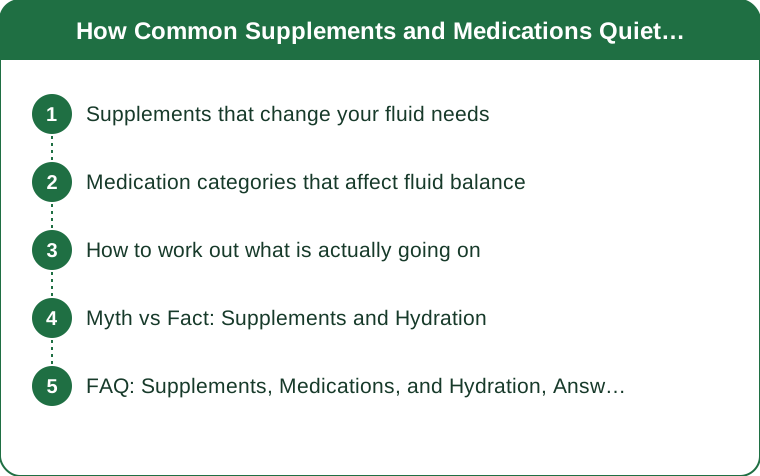
Supplements that change your fluid needs
Creatine draws water into muscle cells, which is part of how it works rather than a side effect. Total body water rises slightly, and intake needs to rise a little to match - this is the well-known one and it is genuinely modest.
The commonly cited weight gain in the first weeks of creatine is largely this water, and it is intracellular rather than the puffiness people fear.
Caffeine has a mild diuretic effect, but the effect is smaller than reputation suggests and it diminishes with regular use. Habitual coffee drinkers show very little net fluid loss, and coffee does contribute to daily intake.
Pre-workout formulas are a different case, because they combine high caffeine with other actives and are often taken before a session that will produce heavy sweat losses. That combination is worth planning fluid around.
Magnesium in some forms - citrate and oxide particularly - increases fluid loss through the gut at higher doses, which is exactly how they work as laxatives. Glycinate is generally gentler if that is a problem for you.
High-dose vitamin C and some protein powders with sugar alcohols can have similar gut effects at higher intakes, which people rarely connect to feeling dehydrated.
And electrolyte supplements can go either way. Used well they improve retention; used heavily without matching sweat losses they add unnecessary sodium load. Match them to how much you actually sweat rather than taking them by habit.
Medication categories that affect fluid balance
Diuretics are the most direct case, prescribed specifically to increase fluid excretion for blood pressure or fluid retention. They change hydration needs substantially and always warrant a conversation about it.
Some blood pressure medications affect fluid and electrolyte balance in ways that interact with heavy sweating, which is directly relevant if you train in heat.
Certain medications reduce sweating, which impairs your ability to cool yourself and raises heat illness risk during exercise in warm conditions. This is a genuinely important interaction for anyone training in summer heat or in a hot studio.
Some antidepressants and antihistamines cause dry mouth, which feels like thirst without necessarily reflecting fluid status - a confusing signal if you are trying to drink to thirst.
Laxatives and some medications for gut conditions increase fluid losses directly, and the effect can be substantial.
Several medications interact with electrolyte levels specifically, which is why adding high-dose electrolyte supplements while on them is a question for a pharmacist rather than a personal experiment.
And the practical point across all of these: your pharmacist is an excellent, underused, free resource for exactly this question, and can usually answer it without an appointment. This is general information, not medical advice - never change a prescribed medication based on an article.

How to work out what is actually going on
Note when it changed and what changed near that date. New supplement, new prescription, new dose, or a seasonal shift - the timing usually identifies the cause faster than any amount of symptom analysis.
Check the leaflet. Fluid and electrolyte effects are typically listed, and most people have never read the leaflet for something they have taken for months.
Weigh yourself before and after a training session occasionally. Weight lost during exercise is largely fluid, and it gives you a real number for your own sweat rate rather than a general guideline.
Watch the pattern, not a single day. One thirsty afternoon means nothing; three weeks of waking thirsty at night alongside a new supplement is a pattern worth acting on.
Do not stack changes. Adding creatine, an electrolyte drink, and a new magnesium supplement in the same week makes the cause impossible to identify. Change one thing and wait a fortnight.
Increase fluid gradually rather than dramatically. Drinking far more than you need produces its own problems, and the answer to most of these situations is a modest increase rather than a large one.
And ask a pharmacist about interactions before adding electrolyte supplements to any prescription, particularly anything affecting blood pressure or kidney function. It is a two-minute conversation and the right one to have.
Myth vs Fact: Supplements and Hydration
Myth: Coffee dehydrates you. Fact: the diuretic effect is mild and diminishes with regular use. For habitual drinkers, coffee contributes meaningfully to daily fluid intake rather than depleting it.
Myth: Creatine causes bloating and water retention under the skin. Fact: the water is drawn into muscle cells, which is part of the mechanism. The early weight gain is intracellular water, not puffiness.
Myth: More electrolytes are always better. Fact: they help when matched to actual sweat losses. Taken by habit without heavy sweating they add unnecessary sodium, and they need care alongside some medications.
Myth: All magnesium supplements are the same for hydration. Fact: citrate and oxide increase gut fluid loss at higher doses - that is how they work as laxatives. Glycinate is generally gentler.
Myth: Feeling thirsty always means you are dehydrated. Fact: several common medications cause dry mouth, which mimics thirst without reflecting fluid status. Worth knowing before you drink to a signal that is not accurate.
Myth: If a medication affects hydration, you should just drink much more. Fact: overdrinking has its own risks, including diluting electrolytes. The right adjustment is usually modest and is a question for a clinician or pharmacist.
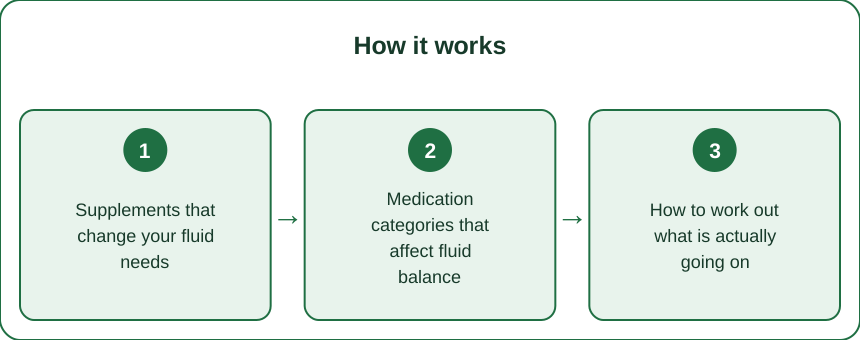
FAQ: Supplements, Medications, and Hydration, Answered
Does creatine mean I need to drink more water?
Slightly, yes. Creatine draws water into muscle cells as part of how it works, so total needs rise modestly. A moderate increase is enough - not a dramatic one.
Does coffee count toward my daily fluid?
For regular drinkers, yes. The diuretic effect is mild and diminishes with habitual use, so coffee contributes to intake rather than depleting it.
Why does my magnesium supplement seem to dehydrate me?
Citrate and oxide forms increase fluid loss through the gut at higher doses - that is the laxative mechanism. Glycinate is usually gentler if this is a problem.
Which medications affect hydration most?
Diuretics most directly, along with some blood pressure medications, medications that reduce sweating, laxatives, and anything affecting electrolyte balance. Ask your pharmacist about yours specifically.
Can I take electrolyte supplements with my medication?
Ask a pharmacist first, particularly with anything affecting blood pressure or kidney function. It is a short conversation and the correct one to have before experimenting.
How do I figure out what changed?
Note the date things changed and what you started near it, read the leaflet, and change only one thing at a time with a fortnight between changes.
When should I see a doctor?
Persistent thirst, waking thirsty regularly, dizziness, or any noticeable change in urination deserve a proper assessment. This is general information, not medical advice.
TL;DR:
- Creatine raises fluid needs modestly by drawing water into muscle cells - that is the mechanism, not a side effect.
- Coffee’s diuretic effect is mild and diminishes with habitual use; it does contribute to daily intake.
- Magnesium citrate and oxide increase gut fluid losses at higher doses; glycinate is generally gentler.
- Diuretics, some blood pressure medications, and anything reducing sweating change fluid balance directly.
- Change one thing at a time, read the leaflet, and ask a pharmacist before adding electrolytes to a prescription.
This is general information, not medical advice - never change a prescribed medication based on an article.
Keep Reading
This article is for general informational purposes only and is not medical advice. Always consult a qualified health professional for guidance specific to you.