Does Poor Sleep Make You More Dehydrated?
Quick Answer: Yes, and the mechanism is specific. Vasopressin - the hormone that tells your kidneys to conserve water - is released in a pulse during the later part of a night’s sleep. Cut sleep short and you miss that pulse, so you lose more water overnight. Research has associated short sleep (6 hours or less) with markers of inadequate hydration compared with 8 hours. The relationship also runs the other way: dehydration disrupts sleep quality, which makes it self-reinforcing. Extra water helps at the margins, but the real fix is the sleep.
The practical version: the dry mouth and headache after a short night is not only about what you drank the day before.

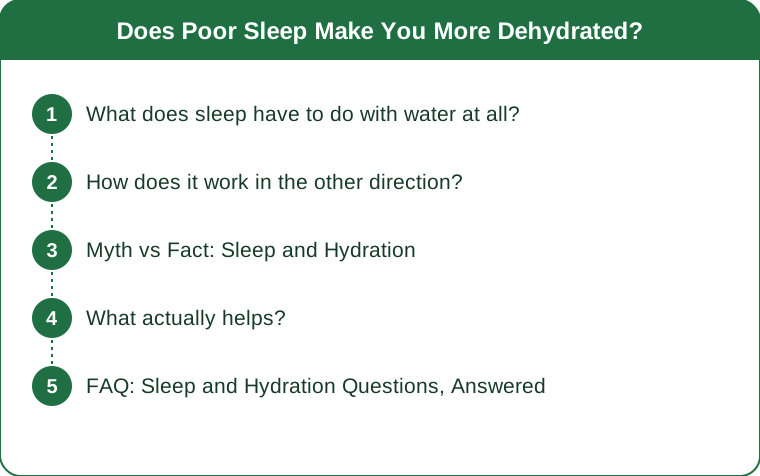
What does sleep have to do with water at all?
One hormone, released on a schedule that assumes a full night.
Vasopressin is your body’s water-conservation signal. Also called antidiuretic hormone, it tells the kidneys to reabsorb water rather than excrete it. This is why you do not normally need to urinate through the night despite going eight hours without drinking.
It is released in a pulse late in the sleep period. The release is concentrated in the later hours of a normal night - roughly the window a 6-hour sleeper cuts off. Waking at 5am instead of 7am means missing part of that pulse, and the kidneys spend those hours excreting more water than they otherwise would.
Research supports the association. Studies examining sleep duration and hydration markers have found that adults sleeping 6 hours or less showed higher odds of inadequate hydration compared with those sleeping 8 hours.
The effect is modest per night and cumulative over weeks. One short night is not a crisis; a month of five-hour nights is a persistent low-grade fluid deficit that shows up as headaches, fatigue, and difficulty concentrating.
And it compounds with everything else. Someone sleeping short is also more likely to drink more caffeine, eat more sodium, and drink less water - so the hormonal effect sits on top of behavioral ones that all point the same direction.
How does it work in the other direction?
Dehydration degrades sleep, which is what makes this a loop rather than a one-way effect.
Dry airways disrupt sleep directly. Insufficient fluid means drier nasal passages and throat, which increases snoring and micro-arousals. A dry mouth waking you at 3am is a common and underrated cause of fragmented sleep.
Dehydration can cause leg cramps. Nocturnal cramps are associated with fluid and electrolyte imbalance, and they are an effective way to end a sleep cycle abruptly.
Thermoregulation depends on fluid. Your body drops core temperature to initiate and maintain sleep, and it uses fluid to do it. Dehydration makes temperature regulation less effective, which can produce restless, warm, broken sleep.
Dehydration raises heart rate and can raise cortisol. Both are physiological arousal signals, and both work against falling and staying asleep.
Which produces the loop: poor sleep increases fluid loss, dehydration degrades sleep quality, and each night makes the next one slightly worse. Most people notice this as a week that starts fine and ends foggy without any single cause they can identify.

Myth vs Fact: Sleep and Hydration
Myth: drinking more water fixes the fatigue from a bad night. Fact: it addresses part of it. The fluid deficit is real and worth correcting, but the cognitive and mood effects of short sleep are mostly about sleep itself. Water helps at the margins; it does not replace the hours.
Myth: you should not drink water before bed. Fact: the advice exists to prevent night-time waking, and it is sensible in moderation. But going to bed meaningfully dehydrated causes its own disruption. A modest glass an hour or two before bed is a better compromise than nothing after 6pm.
Myth: waking up thirsty means you did not drink enough yesterday. Fact: often it means your mouth dried out - from mouth breathing, a dry heated bedroom, or alcohol - rather than that you are systemically dehydrated. A humidifier fixes more morning thirst than an extra litre of water does.
Myth: coffee in the morning dehydrates you further after a bad night. Fact: caffeinated drinks at normal intakes contribute to daily fluid intake despite their mild diuretic effect. The problem with coffee after a short night is what it does to that night’s sleep, not to your hydration.
Myth: dark urine in the morning means you are badly dehydrated. Fact: first-morning urine is normally more concentrated because of overnight water conservation. Judge hydration by your second or third void of the day, not the first.
Myth: alcohol only affects sleep, not hydration. Fact: alcohol suppresses vasopressin directly, which is why you urinate more after drinking and wake up genuinely dehydrated. It attacks both sides of this loop at once.
What actually helps?
In order of effect, with the honest ranking.
Fix the sleep first. It is the upstream cause, and no amount of water compensates for chronic short sleep. Consistent sleep and wake times, a dark cool room, and limiting late caffeine and alcohol do more for morning hydration than a water bottle does.
Front-load fluids across the day. Most of your intake between waking and early evening, tapering in the last two hours. This keeps you hydrated without adding night-time waking.
Have a moderate glass an hour before bed rather than nothing. Enough to start the night hydrated, not enough to guarantee a 3am trip.
Address bedroom air. Heated bedrooms in autumn and winter drop indoor humidity substantially, which dries airways overnight. A humidifier or simply a bowl of water near a radiator changes morning dry mouth more than most people expect - and this is exactly the season it starts to matter.
Drink 300 to 500ml on waking. After 7 or 8 hours without fluid, this is genuinely useful and it is the easiest habit on the list to keep.
Watch alcohol specifically. It suppresses vasopressin and fragments sleep architecture, hitting both sides of the loop. An evening of drinking produces both the worst sleep and the worst hydration of the week, which is why the next morning feels the way it does.
And if you are training, account for it. A short night followed by a hard session raises perceived effort, raises heart rate at a given pace, and raises fluid needs. On low-sleep days, drink more deliberately and train slightly easier - both of those are the sensible response rather than a concession.
FAQ: Sleep and Hydration Questions, Answered
How much extra water do I need after a bad night?
There is no precise figure - the overnight difference is modest. Aim for a normal intake with an extra 300 to 500ml through the morning, and judge by urine color at your second or third void rather than by a target number.
Why do I wake up with a dry mouth every night?
Most commonly mouth breathing, a dry bedroom, alcohol, or certain medications. Persistent dry mouth with snoring or daytime sleepiness is worth mentioning to a doctor, since it can be associated with sleep apnea.
Should I drink water in the middle of the night if I wake up?
If you are genuinely thirsty, a small drink is fine and better than lying awake. Keeping a glass by the bed avoids a fully wakening trip to the kitchen.
Does an electrolyte drink help after poor sleep?
Usually unnecessary unless you also sweated heavily or drank alcohol. Plain water plus normal meals covers ordinary overnight losses; electrolytes matter at higher loss volumes.
This is general information, not medical advice. Persistent excessive thirst, frequent night-time urination, or ongoing poor sleep should be assessed by a healthcare professional.
TL;DR:
- Vasopressin is released late in the sleep period to conserve water - short sleep misses part of that pulse, so you lose more overnight.
- Research associates 6 hours or less with markers of inadequate hydration versus 8 hours.
- It runs both ways: dehydration disrupts sleep through dry airways, cramps, and poor thermoregulation - a self-reinforcing loop.
- Fix the sleep first, front-load fluids, have a moderate glass before bed, drink 300 to 500ml on waking, and sort out bedroom humidity as heating starts.
The useful reframe is that morning thirst is information about last night, not just about yesterday’s water bottle. And if you are entering the season where the heating comes on and the bedroom air dries out, that is the variable worth changing first.
Keep Reading
This article is for general informational purposes only and is not medical advice. Always consult a qualified health professional for guidance specific to you.