Does Sparkling Water Hydrate You as Well as Still Water? The Honest Answer
Quick Answer: Yes - plain sparkling water hydrates essentially as well as still water. It is the same water with dissolved carbon dioxide, and studies comparing beverages find carbonated water in the same hydration tier as tap water. The real differences are behavioral and dental: bubbles fill you up faster so you may drink less per sitting, and carbonation makes water mildly acidic, which matters for enamel only if you sip it all day long.
Somewhere along the way, seltzer picked up a reputation as water’s less legitimate cousin - fine for a treat, but not the real thing. The chemistry disagrees. Here is what carbonation actually changes, what it does not, and the two places where the difference is worth knowing.

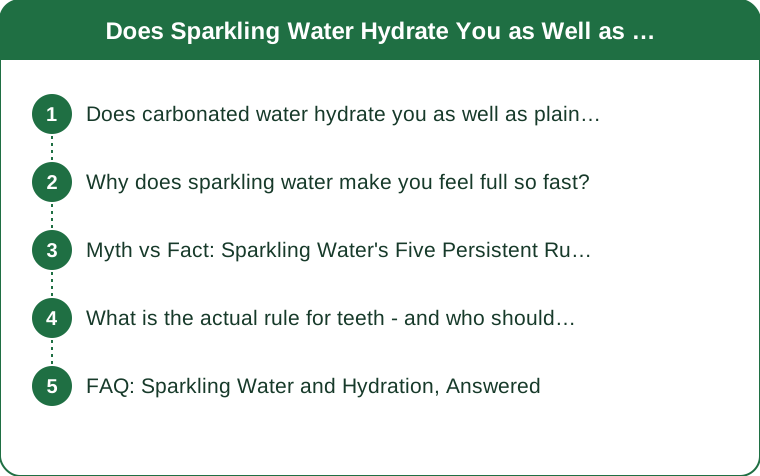
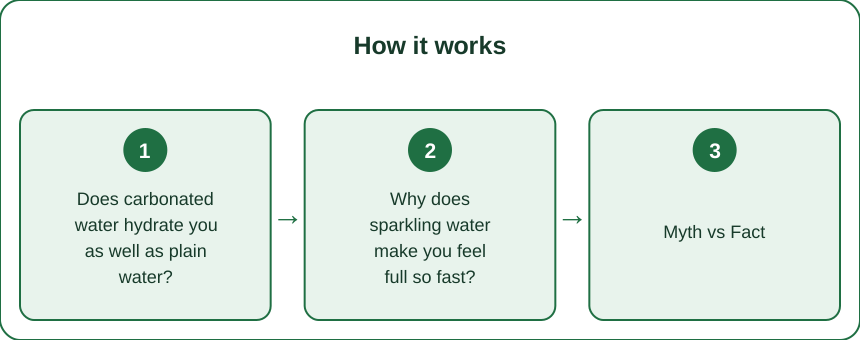
Does carbonated water hydrate you as well as plain water?
Yes, to a degree that surprises people. Sparkling water is water plus dissolved carbon dioxide gas - roughly 99 percent identical to what comes out of the tap. When researchers rank beverages by how much fluid the body retains over the following hours, carbonated water sits alongside still water, well ahead of anything with meaningful alcohol content.
There is no diuretic effect from bubbles. The persistent rumor that carbonation makes you lose more water than you gain has no mechanism behind it. Carbon dioxide leaves through your lungs, and the water stays where you put it. What you drink is what you keep.
The tiny asterisk is sodium. Club soda and some mineral waters contain added sodium - anywhere from 20 to 100+ mg per can - while seltzer typically contains none. For most people this is irrelevant; for anyone tracking sodium closely, it is worth reading the label rather than assuming all fizzy water is the same product.
And flavored is not automatically fine. Plain sparkling water and sparkling water with natural flavor are hydration equals. Sparkling water with added sugar has crossed the line into soda territory, where the calorie load - not the bubbles - changes the calculus.
Why does sparkling water make you feel full so fast?
Because gas takes up room, and your stomach reports volume, not hydration. A 12 oz can of seltzer delivers the same 355 ml of water as a still glass, plus a payload of gas that expands and triggers the stretch receptors that signal fullness. That fullness arrives faster and lingers longer than with flat water.
For some people this is the entire benefit. If you are chronically under-drinking because water bores you, a fizzy version that you actually reach for beats a still one that sits full on the desk. Adherence, not chemistry, is the bottleneck for most people’s hydration.
For others it quietly caps intake. If you need 2.5 liters on a hot training day and the bubbles make you stop at 1.5, the carbonation has become a limiter. The practical split most active women land on: still water around workouts and with meals when volume matters, sparkling for the afternoon stretch when the goal is drinking anything at all.
Timing around training deserves specifics. Chugging carbonated water in the 30 minutes before a run reliably produces the sloshy, gassy feeling nobody wants at mile two - the gas has nowhere to go but up or down. Save the sparkling for after, when a slower, satisfying rehydration is exactly right, and use still water for the immediate pre- and mid-session windows.
Bloating is real but usually transient. Swallowed gas has two exits, and the discomfort in between is why people with reflux or IBS often find sparkling water aggravating. If bubbles reliably make you uncomfortable, that is useful information, not a tolerance to build.

Myth vs Fact: Sparkling Water’s Five Persistent Rumors
Myth: Sparkling water leaches calcium from your bones. Fact: This came from studies on cola, and the suspect was phosphoric acid plus the fact that soda drinkers drink less milk - not carbonation. Carbonated water has never been shown to harm bone density, and carbonated mineral waters actually deliver calcium and magnesium.
Myth: The bubbles dehydrate you. Fact: No mechanism, no evidence. Carbon dioxide exits through your breath; the water is retained normally.
Myth: Sparkling water is as bad for your teeth as soda. Fact: Not close. Carbonation forms weak carbonic acid, putting plain sparkling water around pH 5 - mildly acidic. Cola sits near pH 2.5, roughly a hundred times more acidic, and adds sugar for the bacteria. The gap between seltzer and soda is enormous.
Myth: Any flavored sparkling water is equally harmless. Fact: This is the one worth caring about. Citrus flavoring often means added citric acid, which drops the pH meaningfully and is genuinely more erosive than plain fizz. Lemon and lime flavors are typically the most acidic on the shelf.
Myth: It counts less toward your daily total. Fact: It counts fully. So does the water in coffee, tea, soup, and watermelon. The daily target is total fluid, not glasses of a specific texture.
What is the actual rule for teeth - and who should care?
The dental concern is real but narrow, and it hinges on pattern rather than quantity.
Contact time is the whole game. Enamel does not mind brief acid exposure; saliva neutralizes it within about 20 minutes. What wears enamel is keeping the mouth acidic for hours - the desk-side can nursed from 9am to 4pm, one sip every few minutes, so the pH never recovers.
So drink it in sittings, not in sips. Finish a can within 20 or 30 minutes rather than stretching it across the workday. This single change removes almost all of the theoretical risk.
Use a straw for the citrus-flavored ones. Lemon, lime, and grapefruit varieties carry added citric acid; a straw routes them past the front teeth. Plain sparkling water does not need this.
Do not brush immediately after. Enamel is temporarily softened right after acid exposure - brushing then scrubs it while it is vulnerable. Wait 30 minutes, or rinse with plain water and brush later.
Rinse with still water afterward. Five seconds of tap water resets your mouth pH and costs nothing.
Who genuinely needs the caution: people with existing enamel erosion, dry mouth from medications - less saliva means less natural buffering - frequent reflux, or anyone who has replaced 100 percent of daily fluid with flavored carbonated drinks. Everyone else is fine with the sittings rule.
Who does not need to worry at all: the person having one or two plain seltzers a day alongside regular water. That pattern has no meaningful dental cost, and the alternative it usually replaces - actual soda - was orders of magnitude worse.
FAQ: Sparkling Water and Hydration, Answered
Does sparkling water count toward my daily water intake?
Fully. Plain and naturally flavored sparkling water are counted the same as still water in daily fluid totals, because the only difference is dissolved carbon dioxide gas. If sparkling is the version you actually drink, it is the better option for you in practice.
Is sparkling water bad for your teeth?
Mildly acidic, but far gentler than soda - roughly pH 5 versus cola’s 2.5, and with no sugar. The risk comes from all-day sipping that keeps your mouth acidic, not from drinking it. Finish it within 20 to 30 minutes, rinse with plain water, and skip brushing for half an hour afterward.
Does carbonated water cause bloating or gas?
It can - swallowed gas has to leave somehow, and people with reflux or IBS often find it aggravating. It is uncomfortable rather than harmful, and typically resolves within an hour. If bubbles consistently bother you, still water is the simpler answer.
Can I drink sparkling water during a workout?
Better afterward than during. The gas plus movement is a recipe for cramping and sloshing mid-session, and the fullness caps how much you take in when volume matters most. Use still water before and during; sparkling is genuinely pleasant for post-workout rehydration.
Is mineral water better than seltzer?
Different, not better. Sparkling mineral water carries naturally dissolved minerals like calcium and magnesium, which some people prefer for taste and a small nutritional bonus. Seltzer is carbonated plain water with nothing added. For hydration purposes they perform the same.
TL;DR:
- Plain sparkling water hydrates essentially as well as still water - the bubbles are dissolved gas, not a diuretic.
- Carbonation creates fullness, which helps if you under-drink and hurts if you need high volume on hot or heavy training days.
- The teeth question is about contact time: drink it in sittings, not all-day sips, and rinse with plain water afterward.
- Citrus-flavored versions add citric acid and are the genuinely more erosive ones - use a straw and keep plain seltzer as the default.
- The bone-density scare came from cola, not carbonation, and does not apply to sparkling water.
The best water is the one you actually finish. If bubbles are what get you to 2 liters, the chemistry is on your side - just drink them in one sitting and rinse when you are done.
Keep Reading
This article is for general informational purposes only and is not medical advice. Always consult a qualified health professional for guidance specific to you.