How to Measure Your Own Sweat Rate in One Session
Quick Answer: Weigh yourself naked before and after a one-hour session, add back any fluid you drank, and the difference is your sweat loss for that hour. Every kilogram lost is roughly one litre of sweat. Individual rates vary enormously — from under half a litre to well over two litres per hour — which is why generic advice fits almost nobody. One measurement in your typical conditions gives you a number you can actually use.
Drink eight glasses. Drink half your body weight in ounces. Drink to thirst.
All of these are guesses about you specifically, and the variation between people is larger than the variation between the guidelines.
Here is the ten-minute test that replaces all of them.
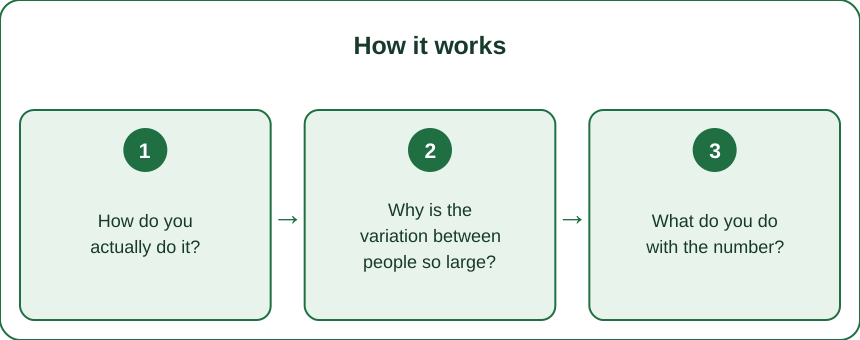
How do you actually do it?
Simply, with equipment you already own.
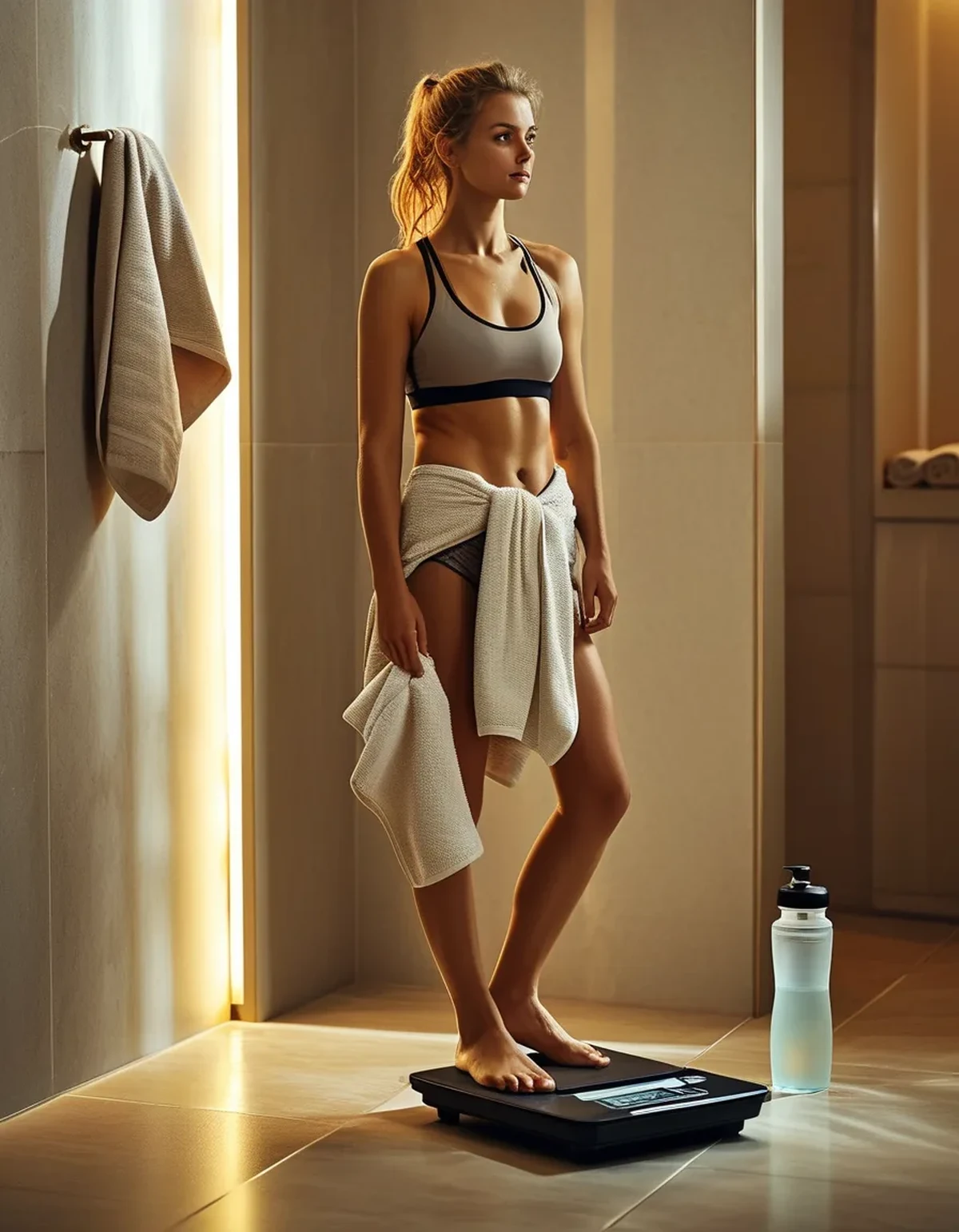
Weigh yourself naked, immediately before the session, after using the toilet. Towel dry if you are already sweating. Note the number to the nearest 0.1kg.
Train for a measured period, ideally an hour, at your typical intensity in your typical conditions. The number you get applies to those conditions, so make them representative.
Track exactly what you drink. Weigh the bottle before and after, or note the volume. One litre of fluid weighs one kilogram, which makes the maths easy.
Towel off thoroughly and weigh yourself naked again. Sweat left on skin and in clothing is weight you actually lost, so drying properly matters.
Do the sum: sweat loss equals starting weight minus ending weight, plus the weight of fluid you drank. If you started at 65.0kg, finished at 64.2kg, and drank 500ml, your sweat loss was 0.8 plus 0.5, which is 1.3kg — roughly 1.3 litres in that hour.
Repeat it in different conditions. A hot outdoor session and a cool indoor one produce very different numbers, and knowing both is what makes the measurement useful across the year.
Why is the variation between people so large?
Because sweat rate depends on factors that differ enormously between individuals.
Body size is the biggest single factor. A larger body produces more metabolic heat and has more surface area, so it sweats more in absolute terms.
Fitness level raises sweat rate, counterintuitively. Trained people sweat earlier and more, because sweating is the cooling mechanism and training improves it. A fitter person doing the same absolute workload usually sweats more, not less.
Heat acclimatisation increases sweat volume and reduces its salt content. Someone who trains outdoors all summer sweats more and loses less sodium per litre than someone who has been indoors in air conditioning.
Environment changes everything. Temperature, humidity, sun exposure, wind and clothing all shift the number substantially. In humid conditions you may drip a great deal of sweat that never evaporates, meaning high fluid loss with poor cooling.
Intensity scales it directly. Higher intensity means more heat produced and more sweat.
Genetics and sex contribute too. Sweat rate and sodium concentration both vary considerably between individuals for reasons that are not modifiable, and average sweat rates differ between men and women partly through body size.
The practical implication: published figures spanning roughly 0.5 to 2 litres per hour cover most people, and that four-fold range is why a single recommendation cannot work. Your number sits somewhere specific in it.
What do you do with the number?
Use it to set an intake target, and to decide whether you need sodium.
Aim to limit losses to around 2 percent of body weight. Performance decrements are commonly reported beyond roughly 2 percent dehydration, and the effect is larger in heat. For a 65kg person, that is about 1.3kg — so if your sweat rate is 1.3 litres per hour, a one-hour session with no drinking sits right at that threshold and a two-hour session clearly exceeds it.
Do not try to replace 100 percent during exercise. Absorption is limited — most people can absorb somewhere in the region of 0.6 to 1.2 litres per hour, and drinking beyond that causes stomach sloshing without benefit. If your sweat rate exceeds your absorption rate, you finish in deficit by design, and you make it up afterward.
Replace roughly 1.25 to 1.5 litres for every kilogram lost, afterwards. More than the deficit, because some of what you drink is excreted. Spread it over a few hours rather than drinking it all at once.
Include sodium if you lose a lot. Sweat sodium concentration varies widely between individuals. If you finish sessions with visible salt marks on skin or clothing, cramp regularly, or lose more than about 1.5 litres per hour, sodium replacement matters rather than being optional. Salted food afterwards works as well as any product.
Recheck the number seasonally. Your sweat rate in August is not your sweat rate in November. Measuring once now and once in a couple of months gives you both ends of the year, and the late-summer number is the one that matters most for the next few weeks.
Do not overdrink. Drinking far in excess of losses can cause hyponatraemia — dangerously low blood sodium — which is rare but serious, and occurs most often in longer endurance events where people drink heavily without sodium. The measurement protects you from this direction too. If you finish a session heavier than you started, you drank too much.
Myth vs Fact: Hydration Measurement
Myth: Weight lost during exercise is fat. Fact: Over an hour it is essentially all fluid. Fat loss on that timescale is a tiny fraction of a kilogram.
Myth: Urine colour tells you enough. Fact: It is a rough guide affected by supplements, medication, recent drinking and time of day. Useful as a daily check, poor as a session-by-session measure.
Myth: Thirst is a reliable guide during exercise. Fact: Thirst is reasonable at rest and lags behind losses during intense or hot exercise. Many people underdrink noticeably when relying on thirst alone in heat.
Myth: Everyone needs electrolyte drinks. Fact: For sessions under an hour in moderate conditions, water plus normal meals covers it for most people. Sodium becomes genuinely important with high sweat rates, long sessions, or hot conditions.
Myth: You should drink as much as possible before a session. Fact: Front-loading large volumes shortly before exercise mostly produces a full bladder. Consistent intake across the preceding day is what shows up as usable fluid.
FAQ: Sweat Rate Questions, Answered
How accurate does this need to be?
Home scales to 0.1kg are sufficient. You are looking for a rough category — light, moderate or heavy sweater — not a precise figure.
Should I measure more than once?
Yes, ideally in a few different conditions: a typical indoor session, a hot outdoor one, and a hard one. Three measurements cover most of your year.
What if I lose more than I can drink?
That is common in heat and it is fine within limits. Manage it by pre-hydrating properly, drinking at your maximum comfortable rate, and replacing the remainder afterwards.
Does this apply to hot yoga and heated classes?
Particularly well, because losses in heated classes are often much higher than people assume. It is one of the most eye-opening places to run the test.
How do I know if I am a salty sweater?
Visible white marks on skin or dark clothing after drying, a persistently salty taste, and frequent cramping are the practical indicators. Formal sweat testing exists but is rarely necessary.
Can I do this without weighing myself?
Not with any accuracy. If stepping on scales is something you would rather avoid, having someone else read it or covering the display and recording only the difference are both reasonable workarounds.
Does caffeine dehydrate me?
At habitual doses, the diuretic effect is modest and caffeinated drinks still contribute meaningfully to fluid intake. It is not the problem it is often described as.
TL;DR:
- Weigh naked before and after an hour of training, add back what you drank. Every kilogram lost is roughly a litre of sweat.
- Individual sweat rates span roughly 0.5 to 2 litres per hour — four-fold variation that no generic guideline can cover.
- Keep losses under about 2 percent of body weight, and replace 1.25 to 1.5 litres per kilogram afterwards.
- Add sodium if you lose over about 1.5 litres an hour or leave salt marks on your clothing.
- Finishing heavier than you started means you drank too much — that direction has its own risks.
Measure once now while it is still hot, and once again in November. Those two numbers cover your whole year.
Keep Reading
This article is for general informational purposes only and is not medical advice. Always consult a qualified health professional for guidance specific to you.