Why You're So Dehydrated After Flying (and the Timing Fix Most People Miss)
Quick Answer: Airplane cabin air is genuinely very low humidity (often 10-20%, far drier than most deserts), but the bigger dehydration driver is usually reduced fluid intake during travel logistics — start increasing water intake the day before a flight, not just during it, for a meaningfully better outcome.
You land feeling foggy, headachy, and parched, having assumed the plane’s dry air was the whole story. It’s a real factor, but the bigger issue is usually how little you actually drank in the 24 hours around travel, not just the cabin humidity itself.

Why is cabin air so much drier than normal environments?
Airplane cabin humidity is typically 10-20%, compared to a normal comfortable indoor range of 30-50%, because cabin air is drawn from outside at cruising altitude where moisture content is extremely low, then only partially humidified for practical reasons. This dry air does increase water loss through skin and breathing over a flight’s duration.
However, the actual measurable dehydration effect of cabin air alone over a typical flight is smaller than most people assume — it’s a real contributor, but rarely dehydrating enough on its own to fully explain how rough people feel after landing.
So what’s actually driving most of the post-flight dehydration feeling?
Reduced fluid intake around travel logistics — rushing through security, limiting drinks to avoid bathroom trips mid-flight, and skipping normal meal/hydration routines — typically accounts for more of the dehydration than the cabin air itself. Add pre-flight coffee or alcohol (both mildly diuretic) and the gap widens further.
The fix follows directly from this: increasing water intake the day before flying, not just sipping occasionally during the flight, addresses the actual larger driver rather than just the smaller cabin-air factor.
What Nobody Tells You About In-Flight Alcohol
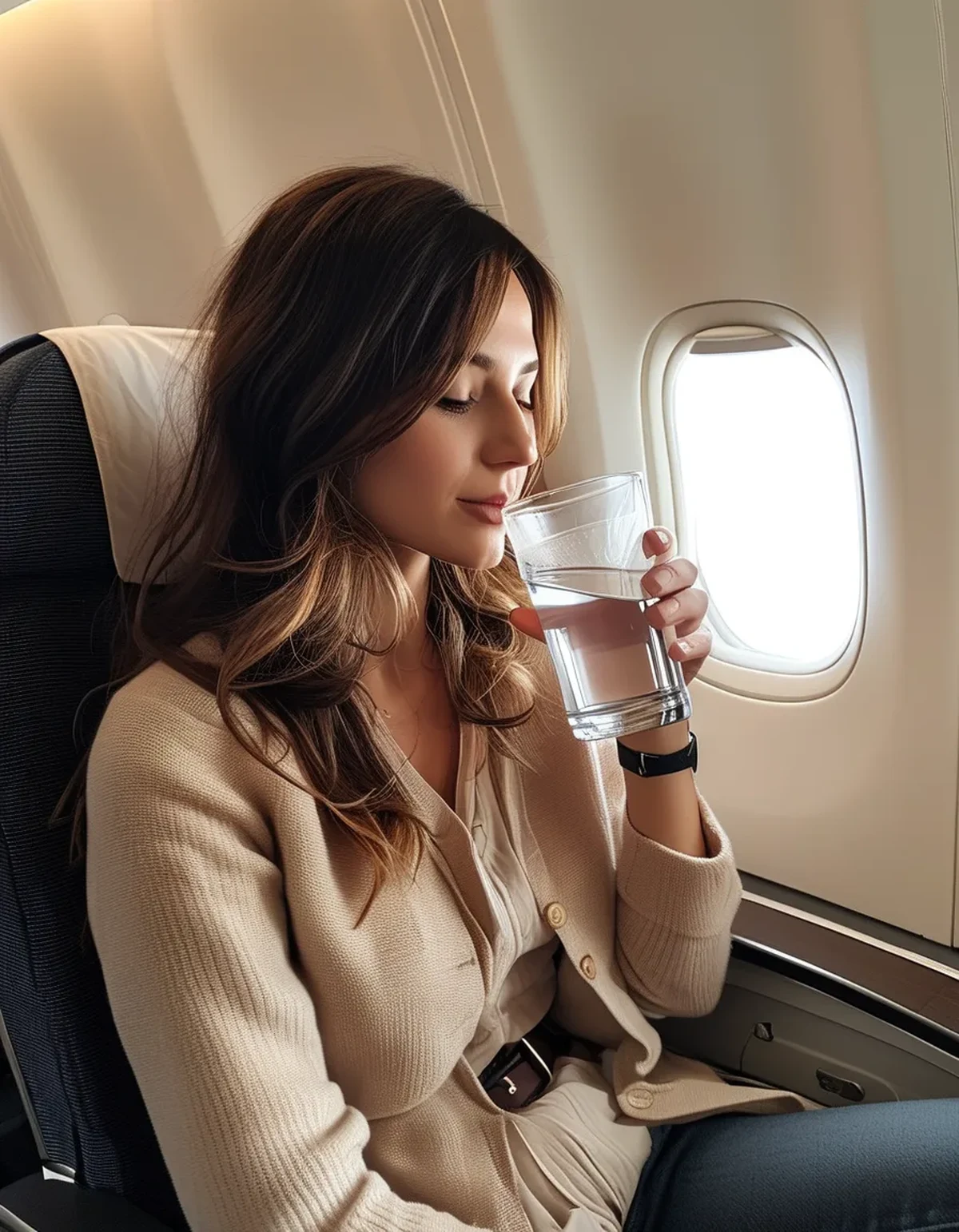
Alcohol’s dehydrating effect is measurably amplified at altitude compared to the same drink at sea level, partly due to lower cabin oxygen levels making alcohol’s effects (including dehydration and next-day fatigue) feel more pronounced — which is part of why the ‘one flight drink hits harder’ feeling has some real physiological basis, not just perception. This is worth weighing before automatically taking the free glass of wine on a long flight.
Matching each alcoholic drink with an equal or larger glass of water during the flight measurably offsets this effect, and is a simple swap most travelers skip without thinking about it.
5 Mistakes People Make With Flight Hydration
1. Only starting to hydrate once already at the airport, rather than the day before.
2. Deliberately under-drinking to avoid bathroom trips, which backfires on overall hydration.
3. Relying on the small in-flight drink service alone for a long-haul flight’s total fluid needs.
4. Drinking alcohol without matching water intake at altitude.
5. Ignoring electrolytes on longer flights, relying on plain water alone for multi-hour dehydration risk.
FAQ: Air Travel Hydration Questions, Answered
How much extra water should I drink the day before a flight?
A reasonable target is simply hitting your normal daily hydration goal consistently the day before, rather than a specific extra amount — consistency matters more than a single large pre-flight chug.
Does bringing an empty water bottle through security actually help?
Yes — filling it post-security lets you sip consistently through the flight rather than relying only on infrequent drink service.
Are electrolyte tablets worth packing for long flights?
For flights over 5-6 hours, many frequent travelers find them helpful alongside water, particularly to offset the combined effects of cabin air and any alcohol or caffeine consumed.
TL;DR:
- Cabin humidity is genuinely very low, but it’s a smaller factor than most people assume
- Reduced fluid intake around travel logistics usually drives more of the dehydration feeling
- Alcohol’s dehydrating effect is amplified at altitude — match each drink with water
- Start increasing hydration the day before flying, not just during the flight itself.
Keep Reading
This article is for general informational purposes only and is not medical advice. Always consult a qualified health professional for guidance specific to you.