Is That Afternoon Headache Actually Dehydration? Here's How to Tell
Quick Answer: A dehydration headache typically comes with other mild signs — dry mouth, slight fatigue, and darker urine — and tends to ease within 30-60 minutes of steady water intake. If a headache persists well past that window despite proper hydration, another trigger like screen strain, caffeine timing, or skipped meals is more likely the actual cause.
Reaching for water first is a reasonable habit, but a headache that doesn’t respond to it is trying to tell you something else is going on.

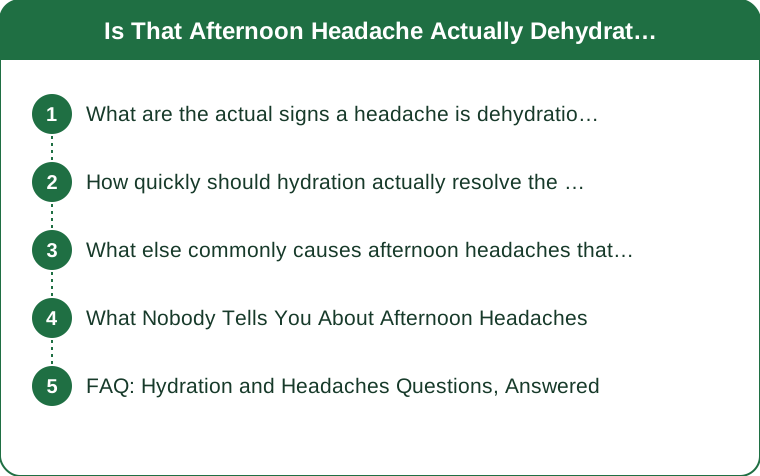
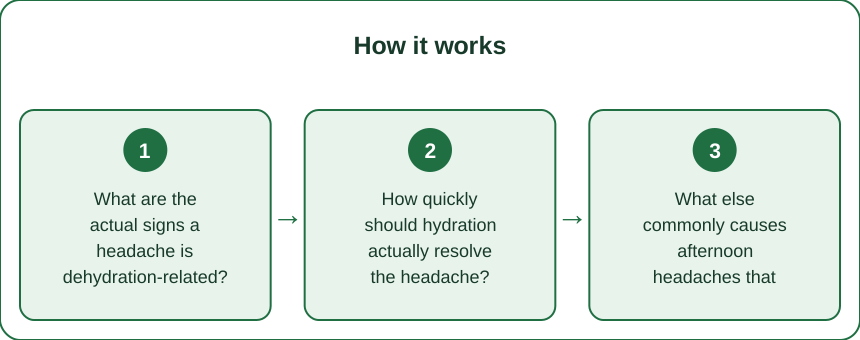
What are the actual signs a headache is dehydration-related?
Alongside the headache itself, dehydration commonly presents with dry mouth, slightly reduced urine output or darker color, mild fatigue, and sometimes lightheadedness when standing — a headache with none of these accompanying signs is less likely to be primarily about fluid intake.
How quickly should hydration actually resolve the headache?
If dehydration is genuinely the cause, steady water intake over 30-60 minutes typically brings noticeable relief, since rehydration restores blood volume and reduces the vascular changes associated with fluid deficit relatively quickly.

What else commonly causes afternoon headaches that hydration won’t fix?
Eye strain from extended screen time, a caffeine dip if your usual intake was skipped or delayed, low blood sugar from a missed or light lunch, and neck tension from desk posture are all common non-hydration causes that water alone won’t resolve.
What Nobody Tells You About Afternoon Headaches
The default advice to ‘drink more water’ for any headache can actually delay addressing the real cause — if it’s caffeine withdrawal or eye strain, cycling through water bottles for hours while the actual trigger goes unaddressed just extends the discomfort unnecessarily.
FAQ: Hydration and Headaches Questions, Answered
How much water should I drink if I suspect dehydration is the cause?
A glass or two (roughly 16-24 oz) over the next half hour is a reasonable test — if the headache measurably eases, dehydration was likely a contributing factor; if not, it’s worth looking at other causes.
Can drinking too much water too fast cause its own problems?
Yes — chugging large amounts very quickly can cause stomach discomfort and, in rare extreme cases, dilute electrolyte balance, so steady intake over time is better than one large gulp.
Does electrolyte content matter for headache relief specifically?
For most everyday dehydration headaches, plain water is sufficient, but after heavy sweating (exercise, heat, illness) electrolytes help restore balance more effectively than water alone.
TL;DR:
- A true dehydration headache usually comes with dry mouth, fatigue, and darker urine
- Real dehydration headaches typically ease within 30-60 minutes of steady hydration
- Screen strain, caffeine timing, and low blood sugar are common non-hydration causes
- Defaulting to water alone can delay addressing the real trigger
Checking for accompanying symptoms first is a faster way to actually solve an afternoon headache than reaching for water and hoping.
Keep Reading
This article is for general informational purposes only and is not medical advice. Always consult a qualified health professional for guidance specific to you.