Why You Get Dehydrated Faster in Cool Weather Without Noticing
Quick Answer: Cold weather blunts thirst sensation by up to 40%, increases fluid loss through respiration (that visible breath is water leaving your body), and drives more urine production through cold-induced diuresis. You lose a comparable amount of fluid and feel far less prompted to replace it. The fix is drinking on a schedule rather than by thirst, using warm fluids that you’ll actually consume, and not assuming that less visible sweat means less fluid loss.
Summer hydration takes care of itself — you’re thirsty, so you drink. Autumn arrives, the thirst signal quietly switches off, and nothing else about your fluid needs changed.
That gap is why headaches, fatigue, and flat training sessions cluster in the first cold weeks of the season.
Why does thirst stop working in cold weather?
Cold triggers peripheral vasoconstriction, which changes the blood volume signal your body uses to generate thirst.
When you get cold, blood vessels in the skin and extremities constrict to conserve core heat. That pushes blood volume toward the core.
Your body reads that central blood volume increase as ‘well hydrated’ — even when total body water is falling. The thirst signal gets suppressed as a result. Research on cold exposure has found thirst reduction on the order of 40% compared to warm conditions.
The same mechanism increases urine output. Cold-induced diuresis is a real, measurable phenomenon: the body offloads what it perceives as excess central volume, so you urinate more in cold weather and lose fluid you needed.
So you get the double effect: less signal to drink, and more fluid leaving. This is why cold-weather dehydration is often more severe than summer dehydration despite lower sweat rates.
It’s most pronounced in people who are outdoors a lot — winter runners, hikers, and anyone commuting in the cold — but it affects everyone to some degree.
Where does the fluid actually go?
Respiration, sweat you can’t see, and increased urine — roughly in that order of surprise value.
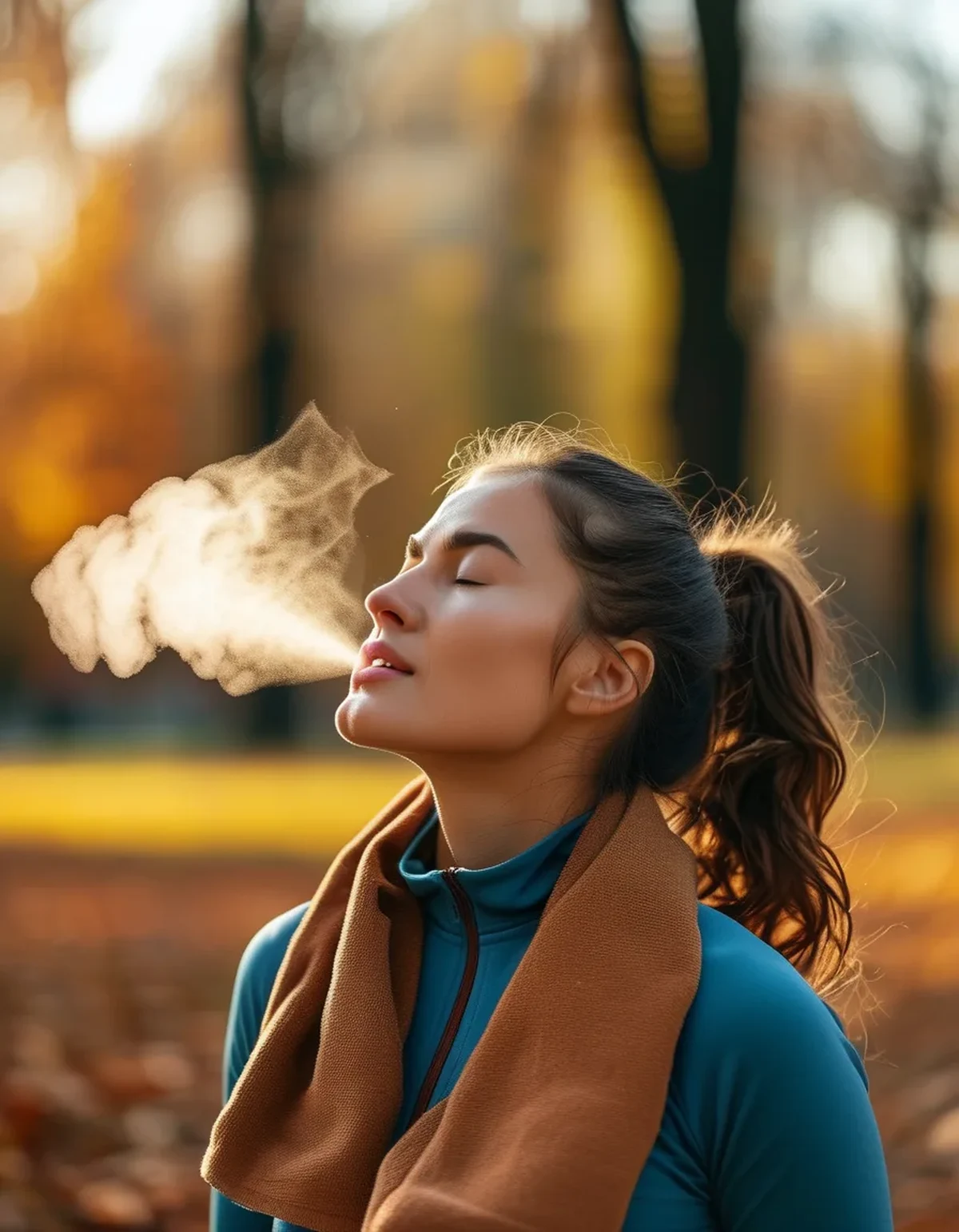
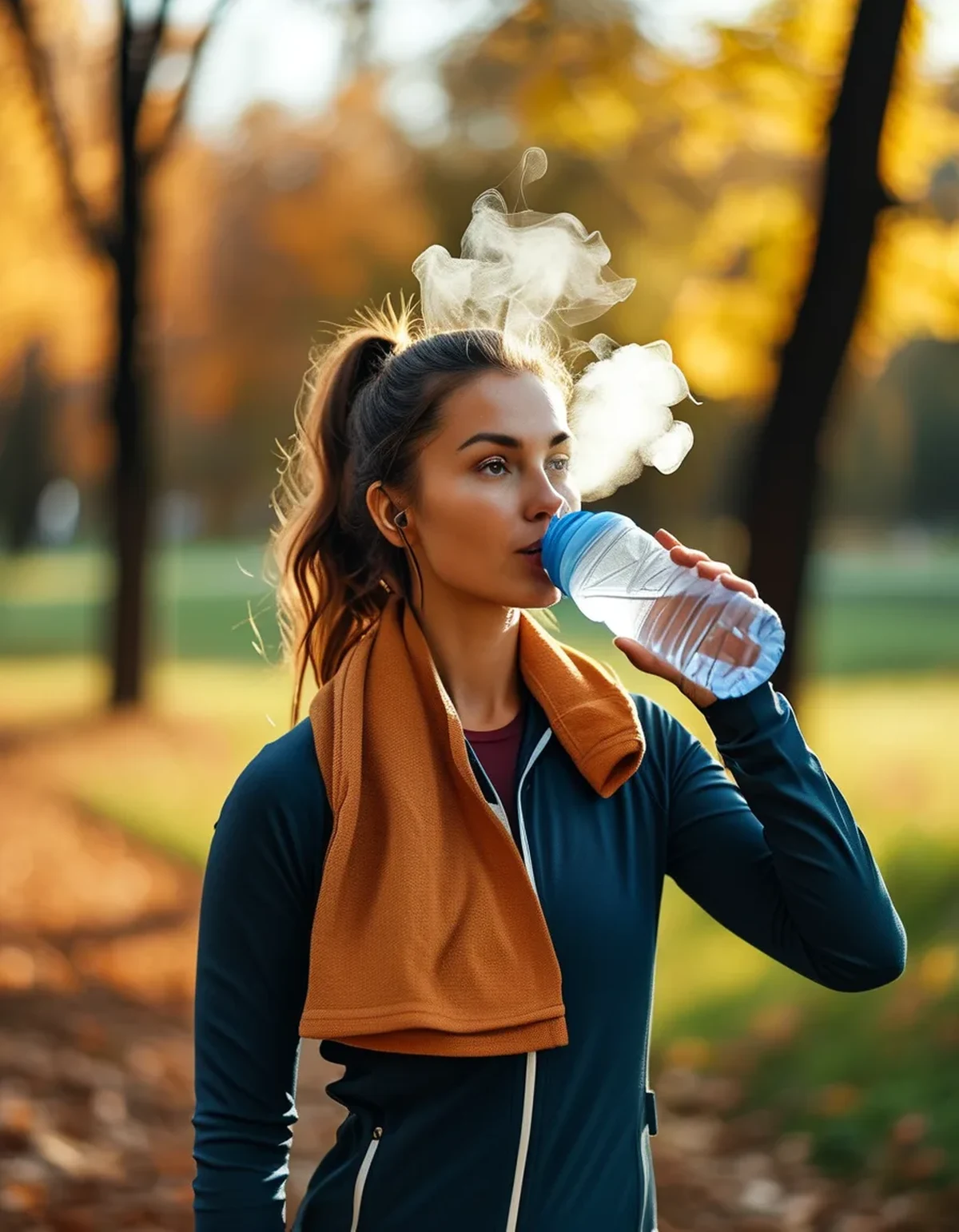
Respiratory water loss increases substantially in cold air. Cold air holds very little moisture. Your airways humidify every breath to near saturation before it reaches your lungs, and you exhale that water. The visible cloud of your breath is literally water leaving your body.
At rest this is modest. During exercise in cold air, with high ventilation rates, it becomes significant — potentially several hundred milliliters per hour of hard breathing in cold dry conditions.
Sweat doesn’t disappear, it just evaporates invisibly. In cold dry air, sweat evaporates before it accumulates, so you finish a session with dry-feeling skin and the same fluid deficit you’d have had in summer. This is the most consistently underestimated source.
Layers make it worse. Overdressing for cold weather training produces substantial sweating inside the clothing, and the layers hide it entirely.
Indoor heating adds a continuous background loss. Heated indoor air often sits at 20 to 30% relative humidity, which increases evaporative loss from skin and airways all day, every day, all winter.
How much should I actually be drinking?
Roughly the same as summer, delivered on a schedule instead of by thirst.
Baseline of about 2 to 3 liters a day from all sources for most adults, including food, which typically provides 20 to 30%. This doesn’t drop in winter.
Add 500 to 750ml per hour of exercise in cold conditions, adjusted for intensity. Most people drink far less than this in winter because they don’t feel prompted.
Set a schedule rather than trusting thirst. A glass on waking, one with each meal, one mid-morning and mid-afternoon, and one during any training. A simple structure beats intention entirely.
Use warm fluids. This is the single most effective practical change — herbal tea, broth, warm water with lemon all hydrate identically to cold water, and people drink dramatically more of them in cold weather. The barrier to winter hydration is often just that cold water is unappealing.
Watch the coffee arithmetic. Coffee does count toward fluid intake at habitual doses — the diuretic effect is smaller than commonly claimed. But replacing water with coffee rather than adding it is where people go wrong.
Urine color remains a rough but useful check. Pale yellow through the day. It’s imperfect — supplements and some foods affect it — but consistently dark urine is a real signal.
Myth vs Fact: Cold Weather Hydration
Myth: You don’t need electrolytes if you’re not sweating visibly. Fact: You’re sweating; it’s evaporating before you see it. For sessions over an hour in cold weather, sodium is still relevant, particularly for anyone in heavy layers.
Myth: Cold water is better for hydration than warm. Fact: Absorption differences are trivial. What matters overwhelmingly is how much you actually drink, and in cold weather that means warm fluids for most people.
Myth: Feeling cold means you’re well hydrated. Fact: The opposite is closer to true — dehydration impairs thermoregulation and makes you feel colder, because reduced blood volume means less warm blood reaching extremities.
Myth: You can catch up by drinking a lot in the evening. Fact: Large volumes at once are largely excreted, and evening loading disrupts sleep. Steady intake across the day absorbs far better.
Myth: Alcohol warms you up on a cold day. Fact: It causes peripheral vasodilation, which produces a warm feeling while accelerating core heat loss — and it’s a genuine diuretic on top. It’s the one drink that actively works against cold-weather hydration.
What are the signs I’m behind?
They’re less obvious than summer dehydration and easy to attribute to the season instead.
Headaches, particularly mid-afternoon. The most common winter dehydration symptom and the one most often blamed on screens, weather, or stress.
Feeling colder than the temperature warrants. Reduced blood volume means poorer circulation to hands and feet. People who are consistently cold in winter are sometimes just consistently dehydrated.
Flat training sessions with no clear cause. A 2% body weight fluid deficit measurably reduces performance, and in winter you can hit that without ever feeling thirsty.
Dry skin and lips, beyond what heating explains. These are usually environmental, and hydration status contributes.
Fatigue and difficulty concentrating in the afternoon. Frequently misattributed to caffeine timing or seasonal mood.
A simple test: weigh yourself before and after a winter training session. Each pound lost is roughly 450ml of fluid. Most people are startled by how much they lose in cold weather. This is general information, not medical advice — persistent symptoms deserve a clinician’s opinion.
FAQ: Cool Weather Hydration Questions, Answered
Do I need sports drinks in winter?
For sessions under an hour, water is fine. Past an hour, or in heavy layers where you’re sweating more than you realize, a sodium source becomes useful. The threshold is about the same as summer.
Does hot tea hydrate as well as water?
Yes. Caffeinated tea has a mild diuretic effect at high doses, but at normal consumption the net fluid contribution is clearly positive. Herbal tea is essentially water with flavor, and it’s the easiest winter hydration tool there is.
Why do I need to urinate more in cold weather?
Cold-induced diuresis. Peripheral vasoconstriction increases central blood volume, and your body responds by excreting what it reads as excess. It’s normal and it does mean you’re losing fluid you should replace.
Should I drink before a cold outdoor run?
Yes — 300 to 500ml in the hour beforehand. Many people skip it in winter to avoid needing a bathroom mid-run, and then finish meaningfully dehydrated. Adjust the timing rather than the amount.
Can you drink too much water in winter?
It’s possible but uncommon outside of endurance events. The bigger winter risk by far is under-drinking. If you’re consuming very large volumes of plain water alongside heavy exercise, adding sodium is the sensible precaution.
Does dehydration make me more likely to get sick?
Adequate hydration supports mucous membrane function in the airways, which is a first line of defense. It’s one contributing factor among many rather than a protective measure on its own.
This is general information, not medical advice.
TL;DR: Your fluid losses barely changed. Your thirst did.
- Cold blunts thirst by up to 40% through peripheral vasoconstriction, and it increases urine output at the same time.
- Visible breath is water leaving your body — respiratory loss rises significantly in cold dry air, especially during hard training.
- Sweat evaporates invisibly in cold air, so dry skin after a session tells you nothing about fluid loss.
- Drink on a schedule, not by thirst. The signal is unreliable this season.
- Use warm fluids. They hydrate identically and you’ll drink far more of them.
- Feeling cold can be a dehydration symptom, not just a temperature one.
Weigh yourself before and after your next cold outdoor session. Each pound is about 450ml, and the number is usually larger than anyone expects.
Keep Reading
This article is for general informational purposes only and is not medical advice. Always consult a qualified health professional for guidance specific to you.