Why You Wake Up Thirsty in the Middle of the Night
Quick Answer: The usual causes are mouth breathing, a dry bedroom, alcohol, a salty evening meal, medications with a drying effect, and simple under-drinking during the day. Persistent unexplained thirst with frequent night urination is different and worth investigating medically, since it can indicate blood sugar problems. Start with humidity and mouth breathing - between them they explain most cases.
Drinking more water right before bed is the intuitive fix and usually the wrong one.
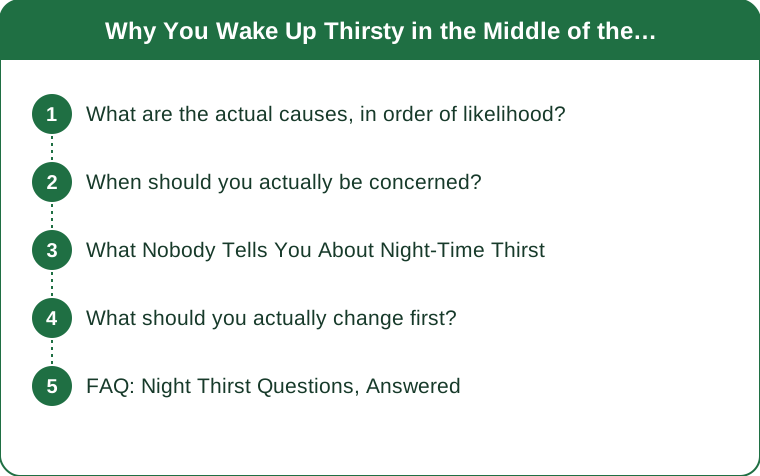
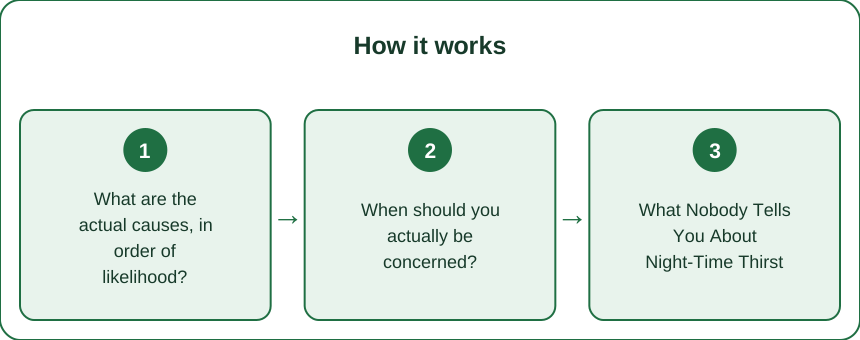
What are the actual causes, in order of likelihood?
Six, and the first two account for the majority.
1. Mouth breathing. Breathing through the mouth for seven hours dries the oral tissues thoroughly, and the sensation of thirst on waking is often not systemic dehydration at all - it is a dry mouth. The tell: you wake with a dry mouth and throat but a drink resolves it almost instantly, and you are not producing unusual amounts of urine. Nasal congestion, allergies, a deviated septum, and sleep apnoea all drive this.
2. Bedroom humidity. Dry air pulls moisture from your airways all night. This is strongly seasonal - the first weeks of heating in autumn drop indoor humidity sharply, and a lot of people who never woke up thirsty in summer suddenly do in October. If your thirst is seasonal, this is almost certainly the cause.
3. Alcohol in the evening. Alcohol suppresses vasopressin, the hormone that tells your kidneys to conserve water, so you lose more fluid overnight than you took in. It also relaxes airway tissue, which increases mouth breathing and snoring. Two mechanisms, same night.
4. A salty evening meal. Sodium raises blood osmolality, which triggers thirst directly. A takeaway, a salty restaurant meal, or a big electrolyte drink after evening training will produce genuine physiological thirst a few hours later.
5. Medications. Dry mouth is a very common side effect - antihistamines, some antidepressants, blood pressure medications, decongestants, and diuretics among many others. If the thirst began within weeks of starting something new, that is a strong clue and a question for your pharmacist.
6. Genuinely not drinking enough during the day. The least interesting and still common, particularly in people who drink mostly coffee until the afternoon and then try to catch up in the evening.
When should you actually be concerned?
There is a specific pattern that separates a nuisance from something worth investigating.
Probably a nuisance:
- Dry mouth that resolves quickly with a sip
- Seasonal, or clearly linked to a particular evening meal or a drink
- Not accompanied by frequent night urination
- Comes and goes rather than being every night
Worth seeing a doctor about:
- Persistent excessive thirst plus frequent urination, particularly waking more than once or twice a night to urinate. Together these are a classic presentation of high blood sugar and should not be waited out.
- Thirst with unexplained weight loss, fatigue, or blurred vision.
- Very dry mouth and dry eyes together, which can indicate an autoimmune condition affecting the glands that produce saliva and tears.
- Loud snoring, witnessed pauses in breathing, or waking unrefreshed alongside the dry mouth. That combination points toward sleep apnoea, which is common, underdiagnosed, and genuinely worth treating.
- Thirst that started with a new medication, which is usually manageable with a change your prescriber can make.
- Any sudden change in a pattern that was previously stable.
The simplest self-check: is it dry mouth, or is it thirst? Dry mouth without increased urination is usually a local airway or humidity issue. Real thirst with increased urination is a systemic signal and belongs in a doctor’s office rather than in an article. This is general information, not medical advice.

What Nobody Tells You About Night-Time Thirst
Drinking a large glass right before bed usually backfires. It does not prevent the 3am dry mouth, because that is a local airway issue rather than a fluid deficit - and it reliably wakes you up to urinate instead. If you are going to drink in the evening, do it 90 minutes before bed rather than at lights out.
Your body deliberately reduces urine production overnight. Vasopressin rises during sleep specifically so you can sleep through. Alcohol blunts it, some medications blunt it, and ageing reduces it. This is why waking to urinate becomes more common with age and is not automatically a sign that something is wrong.
Humidity has a comfort range with a ceiling. Around 40 to 50 percent relative humidity is the target. Below that, airways dry; above about 60, you get condensation, dust mites, and mould. A cheap hygrometer costs very little and turns guessing into knowing - it is the highest-value purchase in this whole article.
Taping your mouth is not the first thing to try. It is popular, and the sensible order is to address why you are breathing through your mouth in the first place - congestion, allergies, or apnoea. Forcing nasal breathing without addressing an obstruction is uncomfortable and, if there is untreated sleep apnoea, unwise.
Evening electrolyte drinks catch people out. Runners and hot yoga practitioners frequently drink something salty after an evening session and then wake up thirsty at 2am. It is exactly the salty-meal mechanism. Finishing electrolyte replacement earlier in the evening, and following it with plain water, resolves it.
Caffeine after mid-afternoon contributes twice. It is a mild diuretic and it degrades sleep quality, which increases the odds of waking at all - and if you wake for any reason, you notice the dry mouth that was there the whole time.
What should you actually change first?
In this order, because it goes cheapest and most likely first.
1. Measure the humidity in your bedroom. If it is under 40 percent, a humidifier or even a bowl of water near the radiator changes things within a night. This is the fastest fix available and it is often the whole answer in the heating months.
2. Check whether you are mouth breathing. Waking with a dry mouth and throat, chapped lips, and morning bad breath is the pattern. If you are congested, address the congestion - saline rinse, allergy management, and a look at whether your bedroom has a dust or pet trigger.
3. Move your fluid intake earlier. Aim for the bulk of your drinking before 6pm, and a modest amount after. Front-loading hydration means you go to bed adequately hydrated without a full bladder.
4. Look at the evening meal. A high-sodium dinner is a common and easily identified culprit. Note what you ate on the nights it happens - the pattern usually appears within a week.
5. Move alcohol earlier or reduce it. The effect is dose-dependent and noticeable. Two drinks with dinner produce a different night than two drinks at 10pm.
6. Keep water by the bed anyway. Not a fix, and a reasonable accommodation. A small sip that lets you go straight back to sleep beats a trip to the kitchen that wakes you fully.
7. If nothing above changes it in two to three weeks, see a doctor - particularly if you are also urinating frequently at night. That combination deserves a blood sugar check rather than another month of experimenting.
FAQ: Night Thirst Questions, Answered
Is it dehydration if I wake up thirsty?
Often not. True dehydration usually comes with dark concentrated urine in the morning, headache, and fatigue. A dry mouth that resolves with one sip is more likely an airway or humidity issue than a fluid deficit.
Does it mean I should drink more during the day?
Possibly, and it is worth checking - pale straw-coloured urine through the day is a reasonable indicator that intake is adequate. But if your daytime hydration is fine and you still wake thirsty, drinking more will not solve it and may just add night waking.
Why is it worse in winter?
Heating dramatically lowers indoor humidity, and colder outdoor air holds less moisture to begin with. This is the single most seasonal item on the list, and the reason the problem often appears in autumn and disappears in spring.
Could my sleeping position matter?
Yes. Sleeping on your back increases the likelihood of mouth breathing and snoring for many people, because the tongue and soft tissues fall backward. Side sleeping frequently reduces both, and it is free to try tonight.
TL;DR:
- The main causes are mouth breathing and dry bedroom air, followed by alcohol, salty evening meals, medications, and simple under-drinking.
- Dry mouth that resolves with a sip is a local airway issue. Genuine thirst with frequent night urination is a systemic signal and needs a doctor.
- Drinking a large glass at bedtime does not fix it and does wake you to urinate. Move intake earlier instead.
- Target 40 to 50 percent bedroom humidity. A hygrometer answers the question in one night.
- Evening electrolyte drinks after training are a common overlooked cause - finish them earlier and follow with plain water.
Check the humidity before you change anything else. In the heating months it is usually the answer.
Keep Reading
This article is for general informational purposes only and is not medical advice. Always consult a qualified health professional for guidance specific to you.